
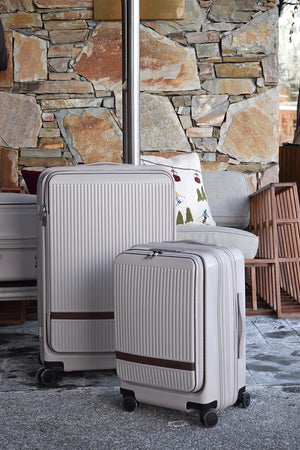

The easiest way to pack a top-opening suitcase is to stop thinking like a clamshell packer.
You have one deep main compartment, so the order matters. Pack the things you will need least at the bottom, build the middle with removable packing cubes, then keep the first things you will want at the top.
That is the whole system.
It does not make every item instantly accessible. If something is at the bottom, you still need to lift out what sits above it. The advantage is that you move whole organised modules rather than dismantling a pile of loose clothing.
- The short version: pack in three layers
- Step 1: Edit before you pack
- Step 2: Build the cubes
- Step 3: Build the base layer
- Step 4: Stack the middle layer
- Step 5: Finish with the top layer
- Step 6: Secure the load
- How to live out of a top-opening suitcase
- Common mistakes to avoid
- Medium or large? Current Glide examples
- Frequently asked questions
The short version: pack in three layers
| Layer | What goes there | Why |
|---|---|---|
| Base, near the wheel end | Shoes, denim, dense items, low-frequency cubes | Keeps heavier items lower when the case is upright |
| Middle | Most clothing in packing cubes | Creates removable, organised modules |
| Top | First-night cube, sleepwear, lighter items, structured garments | Easy to reach when you first open the case |
A separate sealed toiletry bag can sit where it stays upright and is easy to lift out. Keep passports, medication, valuables and anything you need during the flight in your carry-on.
Step 1: Edit before you pack
Lay everything out before anything goes into the suitcase.
Start with the real trip:
- What will the weather be?
- What are you actually doing?
- Can you do laundry?
- Which shoes work with several outfits?
- Which "just in case" items are unlikely to leave the suitcase?
Plan by outfit rather than by individual item. Clothes that work together across several days earn their space more easily than a piece that only works once.
Shoes are often where luggage gets away from you. There is no universal limit, but two or three pairs is a useful reality check for many trips.
The aim is not minimalist packing for its own sake. It is to leave enough room for the case to remain usable once you arrive.
Step 2: Build the cubes
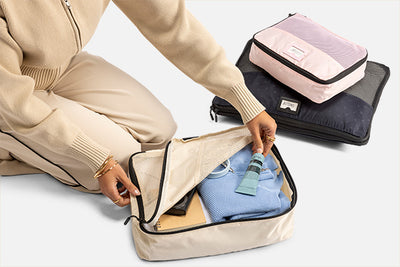
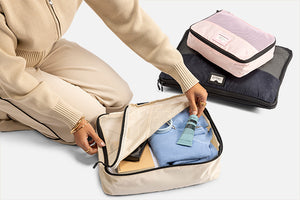
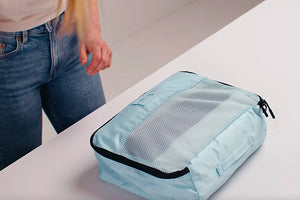
Packing cubes are what give a deep top-opening cavity its structure.
Group them in a way you will understand at the other end. That might be:
- tops;
- trousers and shorts;
- underwear and socks;
- sleepwear;
- activewear;
- one cube per person;
- one cube per part of the trip.
There is no correct category system. The useful system is the one that lets you lift out one cube and know what is inside it.
Roll or fold?
Use the method that suits the garment and the shape of the cube.
Rolling works well for many soft casual clothes and can make small pieces easy to arrange. Fold shirts, blazers and other structured garments along their natural seams and keep them flatter.
Neither method guarantees crease-free clothing. Avoid overstuffing cubes and hang creasable pieces when you arrive.
Where compression cubes help
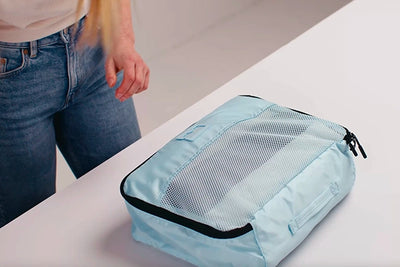
Compression cubes are most useful for soft, bulky items such as jumpers, puffers and activewear.
Zoomlite's current compression cubes are designed to reduce packed volume by up to 30%, depending on the contents. They save space, not weight.
That distinction matters. Compression can make it easier to fit more into the suitcase, which also makes it easier to exceed an airline weight allowance. Weigh the case when you finish packing.
Step 3: Build the base layer
Start with the end of the case nearest the wheels. When the suitcase is upright, this becomes the bottom.
Use that area for denser or more robust items such as:
- shoes in bags;
- denim;
- heavier clothing cubes;
- items you do not expect to need first.
Spread the weight across the width of the suitcase rather than loading one corner heavily.
If the trolley-handle housing creates shallow channels inside the case, use those gaps for socks, underwear or other soft items. Do not force hard objects around the mechanism.
Keep liquids inside a sealed toiletry bag. Position it so it is contained and easy to remove rather than burying loose bottles through the clothing.
Step 4: Stack the middle layer
The middle carries most of the trip.
Place your loaded clothing cubes so they sit snugly without forcing the shell or zip.
A useful rule is:
least-used cube lower, most-used cube higher.
If you are moving through several destinations, you can take this further. A cube for the first stop can sit above one you will not need until later in the trip.
Fill small gaps with soft items rather than creating hard pressure points.
Once the middle is built, use the case's compression flaps or straps to control movement. Checked luggage can be turned and stacked in many orientations, so the layers still need to be secured.
Step 5: Finish with the top layer
The top layer should answer one question:
What will I want first?
Good candidates include:
- first-night clothes;
- sleepwear;
- a frequently used clothing cube;
- a light scarf or layer;
- structured garments you do not want under the full load;
- an empty laundry bag.
This is especially useful when you arrive late and do not want to unpack the whole suitcase just to find pyjamas and a fresh outfit.
If the lid has organiser pockets, use them for flatter, lighter items rather than turning them into another overfilled compartment.
Keep passports, essential medication, valuables and anything needed during the flight in your carry-on.
Spare lithium batteries and power banks must stay in cabin baggage, not checked luggage, under current CASA guidance. Devices containing batteries have separate conditions, so check CASA and your airline if you are unsure.
Step 6: Secure the load
Once everything is in place, secure the internal compression flaps, pad or straps.
Tighten them enough to control movement without crushing delicate items or putting unnecessary strain on the zip.
Then close the suitcase normally.
If you need to sit on the shell or force the zip around a corner, the packing system has stopped working. Remove something, move bulky soft items into compression cubes, or use the expander if the case has one.
Leaving a little breathing room also makes the suitcase much easier to use during the trip.
How to live out of a top-opening suitcase
The layered method becomes most useful after you arrive.
Open the case, lift out the cube you need, then put it back when you are done. A lower cube still requires you to remove the modules above it, but each one comes out as a contained unit.
That is very different from pulling loose clothes out one by one.
For short stays, you may barely unpack at all. For longer stays, you can move selected cubes straight into hotel drawers or shelves and keep the rest in the suitcase.
Pack an empty laundry bag or spare cube for worn clothes. On the return trip, keep dirty items contained and rebuild the case with heavier cubes near the wheel end.
Common mistakes to avoid
Packing the deep cavity loose. This is the quickest way to turn a top-opening suitcase into a digging exercise. Use cubes for the main clothing categories.
Putting first-night items at the bottom. Think about arrival before departure. The first things you need should be near the top.
Using compression to justify overpacking. Compression cubes create space. They do not reduce the weight of what you packed.
Burying liquids among clothing. Keep them contained in a sealed toiletry bag.
Forcing every gap full. A suitcase that is packed to bursting is harder to close and harder to live out of.
Forgetting how the case will stand. Keep denser items toward the wheel end so the load is not unnecessarily top-heavy when upright.
Medium or large? Current Glide examples
The packing method is the same at either size. The number and size of cubes changes.
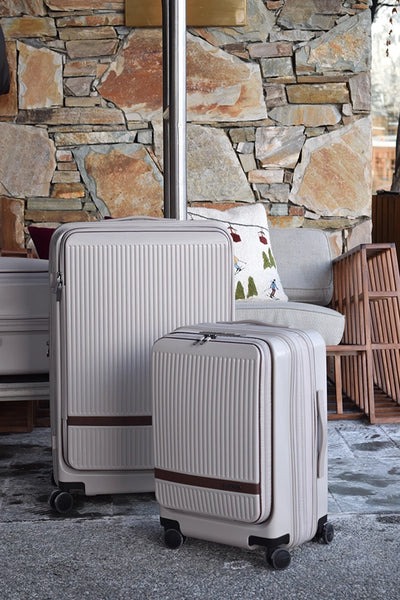
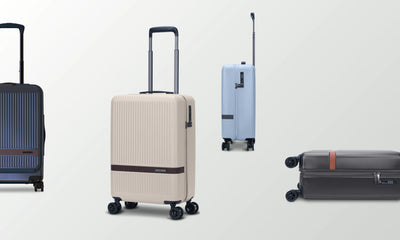
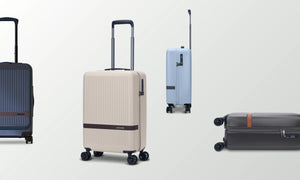
The current Glide Medium Check-In holds 65 L, or 74 L expanded. The current Glide Large Check-In holds 96 L, or 109 L expanded.
Zoomlite's current Medium Suitcase Packing Set contains 8 cubes, with 4 regular and 4 compression cubes. The Large Suitcase Packing Set contains 10 cubes, with 4 regular and 6 compression cubes.
You do not need to use every cube on every trip. The point of the set is to give you enough sizes to build the layers around what you are actually taking.
Trip length is only a guide. Climate, footwear, laundry access and personal packing style can change the amount of space you need dramatically.
The best packing system is the one you can still understand on day five of the trip. With a top-opening suitcase, that usually means fewer loose items, clearer layers and putting tomorrow's needs above next week's.
Should I roll or fold clothes in a top-opening suitcase?
Use whichever method fits the garment and cube best. Rolling works well for many soft items. Folding is usually better for structured clothing. Avoid overfilling either way.
How many packing cubes do I need?
There is no fixed number. It depends on the suitcase, cube sizes and how many categories you create. Zoomlite's current medium suitcase set has 8 cubes and the large set has 10, but you can use fewer larger categories if that suits the trip.
Do compression cubes reduce luggage weight?
No. Compression cubes reduce volume, not weight. Weigh the suitcase after packing and check the baggage allowance for each flight.
What should go at the bottom of a top-opening suitcase?
Put denser, robust and lower-frequency items near the wheel end. Shoes, denim and heavier clothing cubes usually work well there.
What should go at the top?
Keep the first things you will need near the top, such as sleepwear, first-night clothing, a frequently used cube or lighter structured garments.
Is it difficult to reach things at the bottom?
You need to lift out whatever sits above them. Packing cubes make that much easier because you move complete organised modules instead of loose clothes.
Is a top-opening suitcase good for a longer trip?
Yes, provided the case capacity and airline weight allowance suit the trip. The layered method scales well because you can organise a larger load into removable sections rather than one loose pile.


Leave a comment