
Hard Shell Luggage
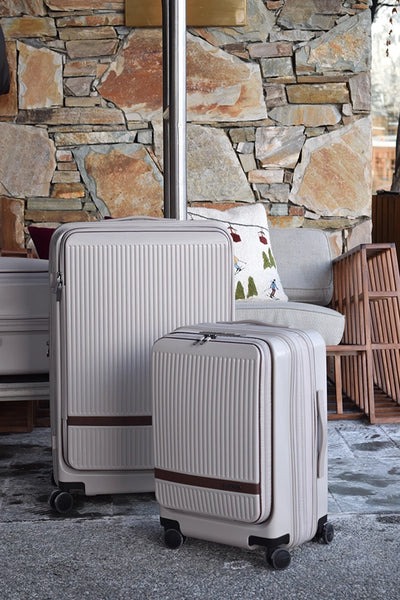
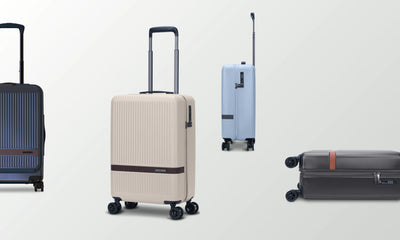
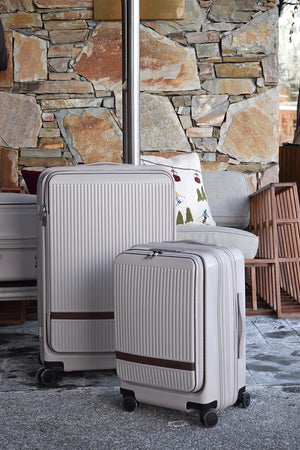
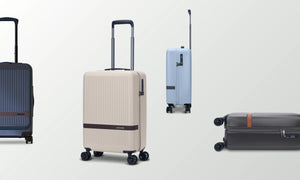
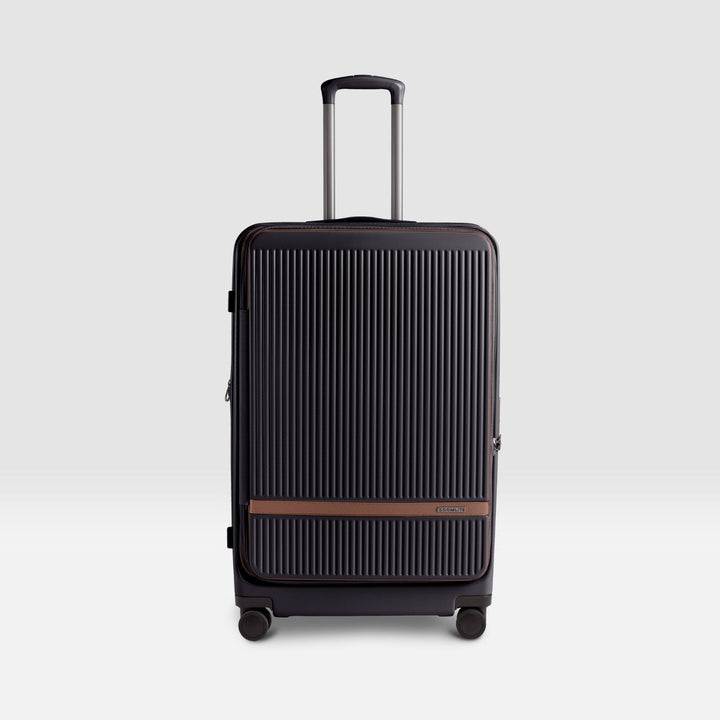
Zoomlite offers two ranges of top-opening hardshell suitcases. Both use German polycarbonate shells, Japanese Hinomoto wheels, and TSA-approved locks. The Glide is the original range, available in medium and large check-in sizes. The Glide Elite builds on the same foundation with an aluminium frame for additional structural rigidity and a wheel lock that keeps the case stationary on slopes or moving trains. The Glide Elite is also available as a carry-on size. The packing experience is identical across both. The choice comes down to whether the aluminium frame and wheel lock matter for how you travel.
The shell is German Makrolon polycarbonate, which flexes under impact rather than cracking like cheaper ABS plastic. The wheels are Japanese Hinomoto spinners, quiet and smooth-rolling with long-term durability. Every case includes a TSA-approved combination lock. The aluminium frame gives the Elite a more rigid overall structure than the zipper-closed Glide, and the wheel lock holds the case in place on slopes, trains, and uneven surfaces.
Browse all top-opening suitcases to compare with the original Glide range, or see the full travel luggage collection for carry-on luggage, softshell, and wheeled duffles.

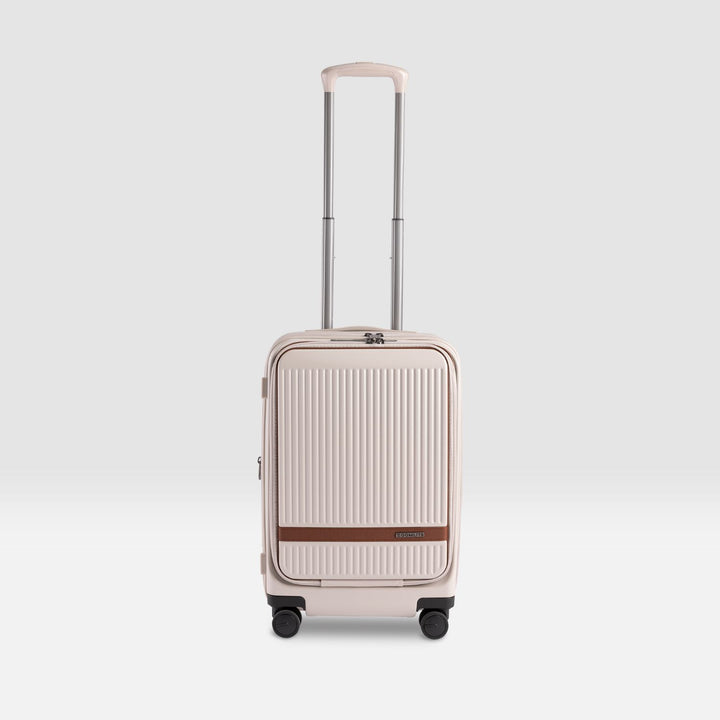
 Glide Elite Carry-On Pro
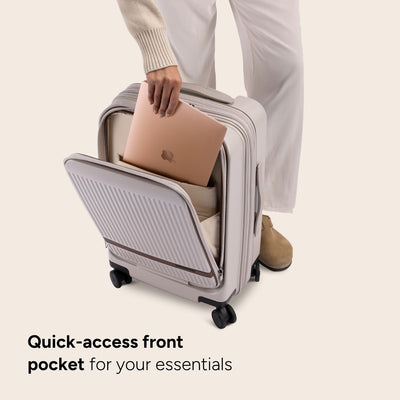
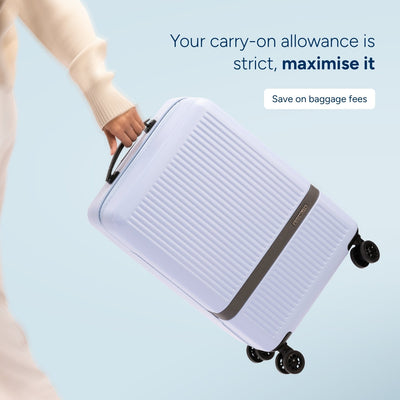
A carry-on built for airport stops: ZeroRoll wheel brakes keep it still, while the front pocket keeps your laptop and passport within reach.
$280.00 AUD
 Glide Elite Large Check-In
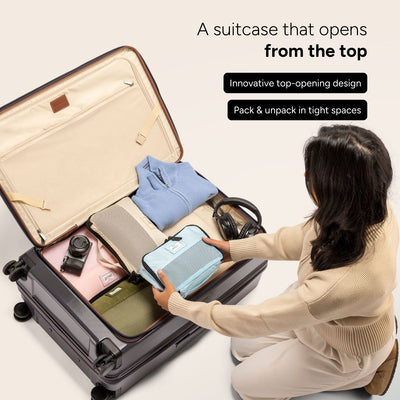
Large top-opening check-in luggage for extended travel, with one deep packing cavity and a rivetless aluminium frame for greater rigidity.
$450.00 AUD
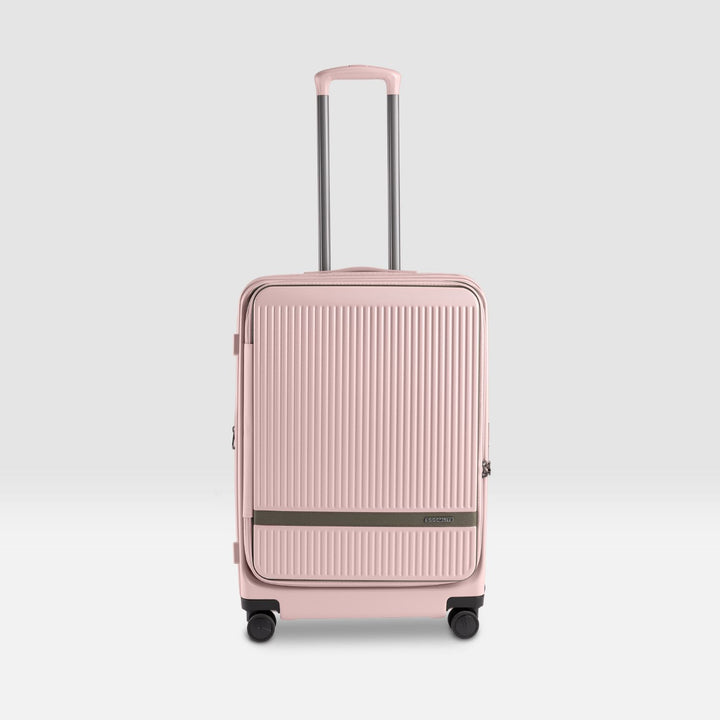
 Glide Elite Medium Check-In
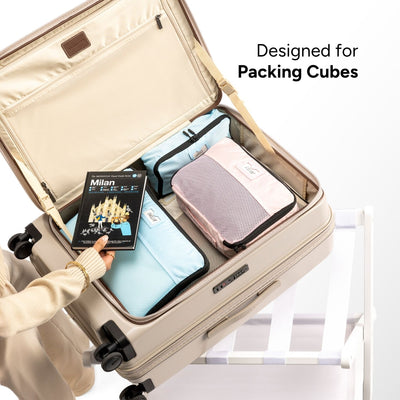
Most hard-shell cases split into two halves. Glide Elite opens from the top, so you pack from above into one deep cavity.
$370.00 AUD



Got questions?
Frequently Asked Questions
What is the difference between polycarbonate, polypropylene, and ABS luggage?
These are the three main materials used in hardshell suitcases. ABS is the cheapest and most common in budget luggage. It's rigid, which means it cracks and splits under impact rather than absorbing it. Polypropylene is lighter and more affordable than polycarbonate, making it common in mid-range luggage. It handles everyday travel well but doesn't offer the same impact resilience over years of use. Polycarbonate is the premium option, used by brands like Rimowa, Tumi, Monos, and Away. It flexes under impact and returns to shape, giving it the longest lifespan under repeated baggage handling. It also has a more refined surface finish. The Glide Elite uses German Makrolon polycarbonate, one of the highest-grade polycarbonates available.
What does the aluminium frame do on the Glide Elite?
The aluminium frame gives the case structural rigidity and uses a clasp closure instead of a full-perimeter zipper. Zippers are the most common failure point on hardshell luggage. They snag, separate under pressure, and wear out with repeated use. The aluminium frame and clasp eliminate that weak point. The frame also makes the case more resistant to being forced open during transit.
What is the wheel lock on the Glide Elite?
A switch on the case that locks the wheels in place so the suitcase stays stationary. This is useful on sloped airport floors, moving trains, cruise ship decks, or any surface where a free-spinning suitcase would roll away. Unlock the switch and the Hinomoto spinner wheels return to full 360-degree movement.
How does the Glide Elite differ from the original Glide?
Both use the same front-opening (top-opening) design, German polycarbonate shell, Hinomoto wheels, and TSA lock. The Glide Elite adds an aluminium frame with clasp closure (instead of a perimeter zipper), a wheel lock, and is available in carry-on size as well as medium and large. The packing experience and interior layout are the same across both ranges.