

It is 10pm in a hotel room. Everyone is tired, one child is melting down, and you are elbow-deep in a shared suitcase trying to find a single pair of pyjamas. The case you packed neatly at home has become a tangled pile by day two, and finding anything means disturbing everything around it.
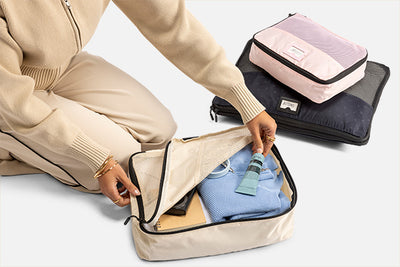
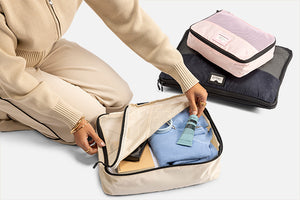
Packing cubes reduce the digging. They divide a shared suitcase into labelled, zip-up sections so each person's clothing, or each shared category, has a predictable place.
The bigger win is choosing a system that suits your family and the way you travel.
The short version
For most families, the easiest starting point is to pack by person: allow roughly two to three clothing cubes per traveller and use colour or labels to tell them apart. Then add one or two shared category cubes for things such as pyjamas or dry swim gear.
Packing by day or stop is useful for first nights, short road-trip stops and highly planned days, but it becomes cumbersome on a longer holiday.
You do not have to commit to one system. In practice, the best family setup is usually a combination.
The three family packing systems
1. By person
Give each family member two or three clothing cubes as a useful starting point and make them easy to identify. Different colours work well, and labels are useful when several people are sharing the same suitcase. That gives each person enough room to separate larger clothing, smaller items and, when useful, a compression cube for bulkier pieces.
This is the simplest base system because everyone knows where their own clothes live. Older children can manage their own cubes, while parents can quickly find younger children's things without opening every compartment.
Zoomlite regular and compression packing cubes are available in multiple colours and include a #TagIt label window, so colour and names can work together (packing cubes).
Best for: most families sharing one or two suitcases.
2. By category
Group selected items that the whole family uses together. A pyjama cube can make a late arrival easier. A dry swim cube can hold everyone's swimmers, rash tops and goggles before heading to the pool.
Use category cubes selectively. You do not need a separate cube for every possible type of clothing.
Packing cubes are breathable rather than waterproof, so wet swimwear belongs in a separate wet bag until it is dry.
Best for: beach and pool holidays, shared sleepwear and other items the family tends to use at the same time.
3. By day or stop
For a first night, road-trip stop or planned activity day, put everything the family will need for that occasion into one cube. You can pull out that cube without opening everyone's main clothing cubes.
A first-night cube might hold the family's pyjamas and next-morning clothes. On a road trip, one overnight cube can come into the hotel while the larger suitcases stay packed. A theme-park day can have its planned outfits ready to go.
This works best when used selectively. Packing a separate cube for every day of a fortnight quickly creates more cubes than organisation.
Best for: first nights, short trips, road trips, planned activity days and multi-stop itineraries.
Which system should your family use?
| Your trip or family | A good place to start |
|---|---|
| Family sharing one or two suitcases | By person |
| Babies or younger children | By person + a first-night cube |
| Beach or resort holiday | By person + a shared dry-swim cube |
| Road trip or several hotel stops | By person + an overnight or stop cube |
| Tweens and teens | By person, with each child responsible for their own cubes |
| Short, highly planned trip | By day or stop can work well |
If you are unsure, start with by person. It is the easiest system to understand and the easiest to maintain once the suitcase has been opened a few times.
The first-night and grab-and-go trick
Two small decisions can make arrival days much easier.
For younger children, pack a first-night cube with pyjamas, nappies if needed, underwear and clothes for the next morning. You can settle everyone without unpacking the whole suitcase.
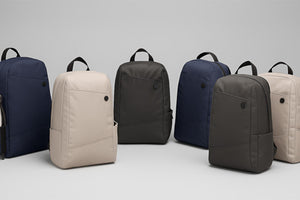
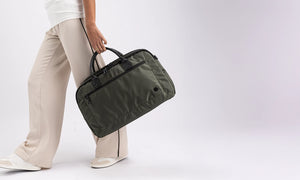
Separately, keep a small grab-and-go carry-on bag for anything the family may need during the journey or before checked luggage is available: travel documents, essential medication, snacks, wipes and a change of clothes for younger children.
The cube organises what you need when you arrive. The carry-on keeps the things you cannot afford to wait for close at hand.
What to look for in family packing cubes
Family packing creates a slightly different set of priorities from packing for one person.
- Easy identification. Colours and labels make it obvious whose cube belongs to whom.
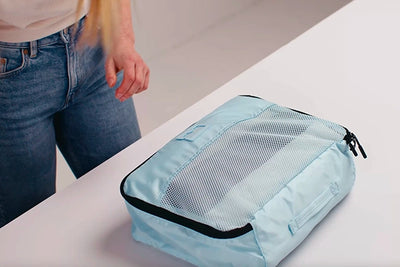
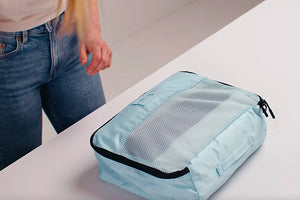
- Visibility. A mesh panel helps you identify the contents without opening every cube.
- A useful mix of sizes. Larger cubes suit clothing, while smaller cubes are useful for underwear, socks and accessories.
- Flexibility. A family system often grows over time, so being able to add individual cubes or mix sizes and colours is useful.
- Reliable construction. Zips should move smoothly and seams should hold up to repeated packing and unpacking. Avoid forcing a cube closed when it is overfilled.
A ready-made suitcase set works well when you want the sizes chosen for the case rather than assembling the layout yourself. Zoomlite's Medium Suitcase Packing Set contains eight cubes and the Large Suitcase Packing Set contains ten, mixing regular and compression cubes to suit those suitcase sizes.
For family travel, a Build Your Own Bundle can make even more sense. You can choose different colours for different people, mix regular and compression cubes, and choose the sizes you actually need. It is also useful if you already own some cubes and want to add to the system rather than start again.
Choose your starting point
Two ready-made suitcase sets, or build your own.


How many cubes does a family need?
There is no single number that works for every family. A practical starting point is:
- Two to three clothing cubes per person
- One or two shared cubes for things such as pyjamas, dry swim gear or the first night
From there, adjust for trip length, climate, suitcase size and how much each person actually packs.
If you prefer a ready-made suitcase system, Zoomlite's Medium Suitcase Packing Set uses eight cubes and the Large Suitcase Packing Set uses ten. These are designed around organising one suitcase, not as a required number for the whole family. If your family needs different colours or a different mix of sizes, build the combination around the people and categories you actually pack.
Compression cubes can be useful for dry, bulky clothing such as jumpers and puffers. They reduce volume, not weight, so always keep the airline's baggage weight limit in mind.
Build your family packing system
The aim is not to fill the suitcase with as many cubes as possible. It is to make the suitcase easy for everyone to understand.
A family of four might start with two to three clothing cubes per person, then add one or two shared cubes for things such as pyjamas, dry swim gear or an overnight stop. Split the cubes across the suitcases rather than trying to make every person's setup identical.
That is only a starting point. A cold-weather trip may need more compression space for bulky layers. A summer weekend may need much less.
The useful part is the logic: give everyone a place, keep genuinely shared items together, and create a special cube only when it solves a real travel problem.
Ready-made set or build your own?
If you want a simple suitcase-by-suitcase solution, Zoomlite's ready-made sets take out the guesswork: the Medium Suitcase Packing Set has eight cubes and the Large Suitcase Packing Set has ten, using a mix of regular and compression cubes.
If you are building a system for several people, the Build Your Own Bundle gives you more control. Choose different colours for each family member, add the cube sizes that suit their clothing, and mix regular and compression cubes where they make sense. You can also add cubes over time as your family, luggage or travel style changes.
Build your own packing cube bundle
Explore Zoomlite packing cubes
How many packing cubes does a family need?
Start with two to three clothing cubes per person plus one or two shared cubes. Then adjust the number to suit the suitcases, trip length and climate.
Should I pack by person, by category, or by day?
For most families, pack by person first. Add shared category cubes where they genuinely help, and use day-or-stop cubes selectively for first nights, short trips or planned activity days.
Do packing cubes actually save space?
Regular packing cubes mainly organise and contain clothing. Compression cubes can reduce the volume of suitable soft clothing, but they do not reduce its weight.
How do I stop the kids' clothes getting mixed up?
Give each child an identifiable colour or label and ask older children to return their clothes to their own cube. Grouping complete outfits can also help with younger children.
Are packing cubes worth it with a toddler?
They can be particularly useful for a first-night cube containing pyjamas, nappies, underwear and a change of clothes. Keep anything needed during the journey in your carry-on rather than the checked suitcase.


Leave a comment