



Your phone runs the whole trip now: the boarding pass, the maps, the ride to the hotel, the tap-to-pay at lunch. A flat battery by mid-afternoon is a real problem, which is why the power bank, also called a portable charger or battery pack, has become one of the most useful things in your bag.
Carrying one onto a plane, though, has got confusing, and the rules keep changing. Two things trip people up: whether you can even use it in the air any more, and whether the one in your bag is the right size to bring at all. There is also that check-in question, when they ask if any power banks are packed in your checked luggage, and the quiet worry about a battery overheating in the cabin.
Here is how it works, for a domestic hop and a long-haul international trip alike.
Yes. Power banks must travel in your carry-on baggage, never in checked luggage. Since 27 March 2026, ICAO's international aviation rules have limited passengers to two power banks and prohibited recharging the power bank itself during the flight. They also advise against using it to charge another device onboard. Airlines can impose stricter rules: Qantas, Jetstar and Virgin Australia prohibit both using and charging power banks during the flight. Power banks up to 100Wh generally need no airline approval; those over 100Wh and up to 160Wh require approval; and ordinary power banks over 160Wh are not permitted as passenger baggage. Always check the operating airline before departure.
- Carry-on only, never checked
- Is your power bank even allowed? The number that matters
- On Australian airlines: carry it, don't use it
- Who allows what: the 2026 snapshot
- Why airlines tightened the rules
- How to pack a power bank the right way
- Travel-smart tips for lithium batteries
- Choosing a plane-friendly power bank
- Frequently asked questions
Carry-on only, never checked
A power bank is a spare lithium battery, and spare batteries are not allowed in checked luggage on any airline, anywhere. They travel in the cabin, where a problem can be seen and dealt with straight away. Under the international rules, passengers may carry up to two power banks, although individual airlines can impose a lower limit. Qantas, Jetstar and Virgin Australia permit up to two; always check the operating airline on an international itinerary.
If you are checking a bag, take the power bank out and keep it on you. A power bank found in checked luggage can hold your bag up at screening, and it is the one battery rule airlines never compromise on.
Is your power bank even allowed? The number that matters
Airlines measure power banks in watt-hours (Wh), but the label you shopped by is almost always in milliamp-hours (mAh). That mismatch is where most of the confusion lives.
To convert, the rough sum is milliamp-hours divided by 1000, times 3.7, which gives you watt-hours (the cells sit at about 3.7 volts). Easier still, read the case, since most banks print the Wh on the bottom. Here is how the common sizes land.
| Power bank size | Roughly | Allowed on board? |
|---|---|---|
| 5,000mAh | 18Wh | ✓ Yes, no approval |
| 10,000mAh | 37Wh | ✓ Yes, no approval |
| 20,000mAh | 74Wh | ✓ Yes, no approval |
| 26,800mAh | 99Wh | ✓ Yes, and about as big as you can go without approval |
| 30,000mAh or larger | Varies | Check the printed Wh rating and airline policy |
These examples assume a nominal battery voltage of 3.7V. Do not decide whether a power bank is flight-safe from its mAh figure alone. Check the Wh rating printed on the product. If no Wh rating or reliable voltage information is visible, the airline or airport may refuse it.
On Australian airlines: carry it, don't use it
This is the 2025 change that catches regular travellers off guard. To cut the risk of a battery fire in the cabin, Australia's major airlines now ban using or charging a power bank during the flight:
- Virgin Australia, from 1 December 2025.
- Qantas, QantasLink and Jetstar, from 15 December 2025.
You can still charge your phone, laptop or headphones from the in-seat USB port where there is one. What you cannot do is run your devices off a power bank, or charge the power bank itself, in the air. Charge the bank in the lounge or at your hotel, then let it sit in your bag for the flight.
It is not only an Australian rule. Through 2025 more than a dozen international carriers brought in similar bans, among them Singapore Airlines, Cathay Pacific, Emirates, Korean Air and EVA Air. Not every airline has, so on an international or connecting trip, check each carrier you are flying. On a multi-leg itinerary, plan around the strictest rule on any leg.
Who allows what: the 2026 snapshot
The 100Wh and 160Wh thresholds form the international baseline, but individual airlines and national regulators can impose stricter limits. For the Australian carriers:
| Qantas / Jetstar / QantasLink | Virgin Australia | |
|---|---|---|
| In effect | 15 December 2025 | 1 December 2025 |
| Use or charge in flight | ✗ No | ✗ No |
| Carry on board | Up to 2, carry-on only | Up to 2, carry-on only |
| Maximum size | Up to 160Wh (100 to 160Wh needs approval) | Up to 100Wh freely; 100 to 160Wh needs prior approval; over 160Wh not allowed |
| Where to keep it | In reach: seat pocket, under the seat, or a nearby overhead locker | In reach: seat pocket, under the seat, or on you, not in the overhead locker |
For international airlines, expect the same carry-on-only rule and the same Wh limits, and increasingly the same ban on in-flight use. The thing to confirm each time is whether that carrier bans using the bank in the air. There is almost always a "dangerous goods" or "batteries" page on the airline's website that spells it out.
Why airlines tightened the rules
Power-bank fires are uncommon, but the consequences onboard an aircraft can be serious. In July 2025, a 37Wh power bank inside a passenger's backpack entered thermal runaway and started a fire in an overhead locker on a Virgin Australia flight from Sydney to Hobart. The ATSB described it as the first reported power-bank-related in-flight fire in Australia or on an Australian-registered aircraft. The incident showed why airlines increasingly want power banks protected against short circuits, stored within reach and kept out of overhead lockers where possible.
The ATSB confirms the battery was rated at 37Wh, was inside a backpack in an overhead locker and entered thermal runaway. It describes this as the first reported Australian power-bank in-flight fire.
The ICAO rules provide the international starting point, but airlines and national regulators can be stricter. Emirates, for example, permits only one power bank and limits it to under 100Wh. Domestic flights within mainland China require an acceptable CCC certification mark and prohibit recalled models. Check the rules of the airline operating each flight, particularly when an itinerary includes a codeshare or domestic connection.
How to pack a power bank the right way
- Keep it in your carry-on, always. Never the checked bag.
- Put it where you can reach it: a seat pocket, the seat in front, or your day bag, not buried in the overhead locker on Virgin.
- Protect the ports so it cannot short against keys or coins. A tech pouch, or even the original box, does the job.
- If your bank is between 100 and 160Wh, arrange approval with the airline before you fly, and expect to show the Wh rating at check-in.
- Charge it before you board, since you cannot top it up in the air.
Travel-smart tips for lithium batteries
A power bank is just one of the lithium batteries you travel with. Phones, laptops, tablets, earbuds, smartwatches, cameras and e-readers all run on them, and the same few habits keep the lot safe. The airline industry body, IATA, runs a Travel Smart With Lithium Batteries campaign, and Australia's regulator, CASA, covers the same ground in its Pack Right guidance. The short version:
- Bring only what you need. Fewer spare batteries and power banks means less to manage.
- Keep battery-powered devices in your carry-on wherever practical. If an airline permits a device with its battery installed to travel in checked baggage, switch it off completely and protect it from damage and accidental activation. Power banks and spare batteries must always remain in the cabin.
- Protect spare batteries and power banks so the terminals cannot short against keys or coins: original packaging, a tech pouch, or tape over the terminals.
- If your cabin bag gets checked at the gate, take the power banks and spare batteries out first and keep them on you. They are not allowed in the cargo area under the plane.
- Get airline approval before you fly if a battery is over 100Wh, and expect to show the rating at check-in.
- Speak up straight away if a device gets hot, swells, smokes or is damaged. Tell the cabin crew rather than packing it away.
- Check each airline's battery policy before you fly, since the rules are still changing.
For the official Australian guidance, CASA's Pack Right page on lithium batteries is the one to read.
Choosing a plane-friendly power bank
If you are buying a power bank specifically for air travel, choose one with a clearly printed rating below 100Wh. That avoids the usual airline approval process based on battery capacity, although airline quantity, storage and national requirements can still apply.
For most people that is no compromise at all. A 10,000mAh bank is a full phone charge or two and slips into a jacket pocket. A 20,000mAh one covers a couple of days of heavy use or tops up a tablet. Larger-capacity power banks require more care. Do not rely on the advertised mAh figure alone — check the printed Wh rating before travelling.
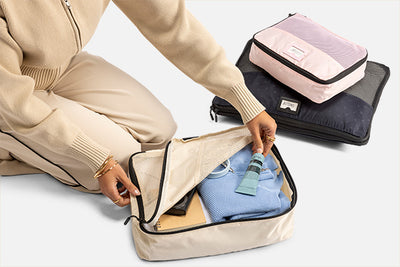
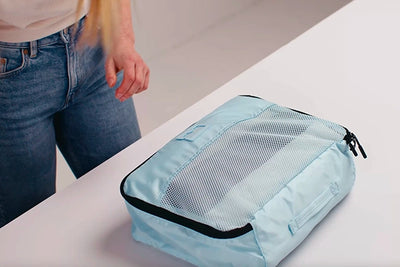
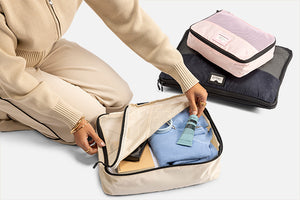
Whatever size you settle on, it lives with the rest of your charging kit. A GaN wall charger does the fast charging from the wall, and a tech organiser keeps the bank, its cable and your adapter together and within reach, which is exactly where the airlines now want them.
The short version
Carry your power bank in your cabin bag, keep it under 100Wh so you never need approval, charge it before you fly, and leave it switched off in the air. On an international or connecting trip, take a minute to check each airline, because the in-flight rules are still changing. Do that and the power bank goes back to being the quiet insurance it is meant to be.
Can I bring a 20,000mAh power bank on a plane?
Yes. A 20,000mAh power bank rated at approximately 74Wh is below the normal 100Wh approval threshold. Check the Wh rating printed on the product and your airline's policy.
Is a 40,000mAh power bank allowed on a plane?
You cannot tell from the mAh figure alone. Depending on its rated voltage, a 40,000mAh power bank may fall within the 100–160Wh approval range or exceed 160Wh and be prohibited. Check the Wh figure printed on the power bank and confirm it with your airline before flying.
What is the biggest power bank I can take on a flight?
Under the international baseline, power banks up to 100Wh generally do not require airline approval. Those over 100Wh and up to 160Wh require approval, although some airlines impose stricter limits. Power banks over 160Wh are not permitted as passenger baggage.
Can I use my power bank during the flight in 2026?
Not on Qantas, Jetstar, QantasLink or Virgin, and not on a growing number of international airlines. You can still charge devices from the in-seat USB port. Charge the power bank before you board.
Can I put a power bank in checked luggage?
No. Power banks and spare batteries must travel in the cabin on every airline. If you check a bag, keep the power bank on you.
How many power banks can I bring?
Up to two per passenger in your carry-on, on Australian carriers and most others.
Do these rules apply to international flights?
Yes. The carry-on-only rule and the 100Wh and 160Wh limits are an international standard, so they apply worldwide. The in-flight use ban is spreading airline by airline, so check each carrier on an international or connecting trip.
Can I still use the in-seat USB port for my phone?
Yes. The ban is on using or charging the power bank itself. Charging your phone, laptop or headphones from the in-seat USB port is fine where the aircraft has one.


Leave a comment