

It usually happens when you need something in a hurry. The clean shirt is somewhere near the bottom of the suitcase, and finding it means pulling out half your clothes.
Packing cubes make that easier. They keep groups of clothes together, so you can lift out what you need without disturbing everything else. They can also help you pack more compactly, particularly when you use compression cubes.
There is no complicated system to learn. The trick is choosing a few useful categories, packing each cube sensibly and arranging them to suit your bag.
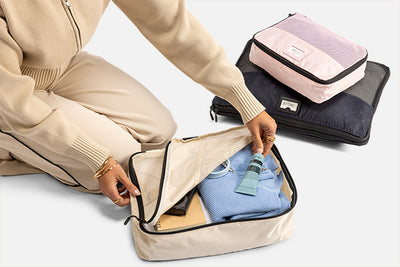
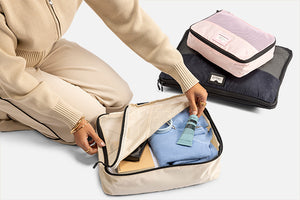
Sort clothes by type, outfit or person. Choose cubes that fit each group, roll or fold the clothes neatly, and zip them closed without straining the seams. Arrange the cubes inside your suitcase so the ones you need first are easy to reach. Keep worn clothes separate, and use compression cubes when you want to reduce bulk further.
- What are packing cubes?
- Do packing cubes actually save space?
- Why use packing cubes?
- How to use packing cubes, step by step
- What to pack in each cube
- How many packing cubes do you need?
- Packing cube tips for different trips
- The biggest mistakes (and how to avoid them)
- When packing cubes are not worth it
- Which cubes for which traveller
- Choosing packing cubes that suit the way you travel
- Frequently asked questions
What are packing cubes?
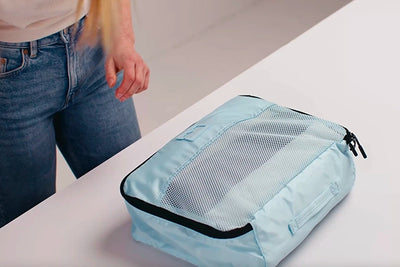
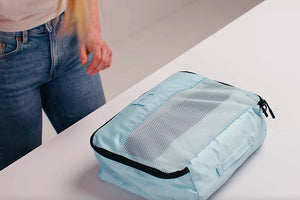
Packing cubes are lightweight zip pouches that divide the inside of a suitcase, backpack or travel bag into smaller sections. You might use one for tops, another for underwear, or one for everything you need at the next stop. In Australia and New Zealand, you may also hear them called packing cells.
Unlike a fixed suitcase divider, a cube can be lifted out, moved to a hotel drawer and put back into your case without unpacking every garment.
There are two main types:
- Standard packing cubes organise clothes and hold them within a defined shape. When you fill and zip a cube closed, the fabric keeps clothing contained and can provide a little natural compression.
- Compression packing cubes have an additional zip that draws the sides closer together. This squeezes the packed clothes further, expelling some trapped air and reducing their volume. The amount saved depends on the contents.
You will also find specialised organisers for shoes, toiletries, tech accessories and garments that need more careful folding. They serve different purposes, so you do not need every type to get started.
Do packing cubes actually save space?
Yes, they can. Standard packing cubes keep clothes in a neat, contained shape. Zipping a filled cube closed can gently compress the contents and stop clothing from spreading out, making it easier to fit the cubes together inside a suitcase. How much space you save depends on what you pack and how tightly you were packing before.
Compression packing cubes take that a step further. Once the main zip is closed, the extra zip draws the sides of the cube together, pushing out more trapped air. Soft, bulky clothes such as t-shirts, activewear and knitwear generally compress more than dense items such as jeans.
Zoomlite's current compression cubes are designed to reduce suitable packed contents by up to 30 per cent, depending on the clothing. This refers to additional reduction in packed volume, not a guaranteed saving for every load.
Neither type makes the contents lighter. You may fit more into your suitcase, but you still need to watch the airline's weight limit. For a closer comparison, see our compression packing cubes guide.
Why use packing cubes?
Saving space is only one reason. The everyday benefit is being able to find things and keep the suitcase organised after the first night of a trip.
- Find things faster. Lift out your tops cube rather than searching through every layer of clothing.
- Unpack less. On a multi-stop trip, take out only what you need and leave the other cubes closed.
- Keep categories separate. Underwear, swimwear and children's clothes are easier to manage when they have their own place.
- Repack more easily. When it is time to leave, the contents are already grouped together.
- Keep things private. If your bag is opened for inspection, underwear and other personal items stay zipped inside their own cube rather than spread out for everyone to see.
Packing cubes are not a cure for overpacking. They simply give the clothes you have chosen a more manageable place to go.
How to use packing cubes, step by step
1. Sort before you pack
Lay out your clothes and decide how you want to find them during the trip. The three easiest systems are:
- By clothing type: tops together, bottoms together, underwear and socks together. This is a practical choice for longer holidays.
- By outfit or day: pack complete outfits together for short trips, weddings or work travel.
- By person: useful when family members share a suitcase.
You can mix these systems. For example, each family member could have a colour, with a separate shared cube for swimwear. Labels or colour-coded cubes help everyone find their things quickly. Zoomlite packing cubes have a label window, so you can mark each one "Tops", "Swimwear" or a family member's name.
Start with the categories you will actually use. You do not need a separate cube for every small item.
2. Fill each cube comfortably
Pack clothes so the cube holds a tidy shape, then close the zip without pulling hard on the seams. The enclosed space will keep the contents together and may give them some gentle compression.
A half-full cube is not a problem if it makes the category easy to find. But if you have to force the zip, take something out or choose a larger cube. Overfilling makes it harder to open, find things and repack.
If you are using a compression cube, close the main zip first. Then work the second zip around gradually, easing the fabric and clothing away from the teeth as you go. Do not force it past a bulky fold.
3. Roll, fold, or do both
There is no single method that works best for every garment.
- Roll soft items such as t-shirts, activewear and sleepwear. Arrange the rolls side by side so you can see and remove individual pieces.
- Fold shirts, trousers and more structured clothes along their natural fold lines, then stack them flat.
- Go gently with crease-sensitive garments. Fold them without excessive pressure and hang them when you arrive.
You can mix methods in one cube. For example, place folded trousers underneath rolled t-shirts if the cube's shape allows it.
The aim is to make the contents easy to see and retrieve, not to create the tightest possible bundle at any cost. No method guarantees clothes will come out wrinkle-free.
For suits, dresses and good shirts, a Garment Folder is a better fit than a cube. It keeps formal wear flatter, so it arrives less creased.
4. Arrange the cubes to suit your bag
Pack heavier cubes closer to the wheel end of a wheeled suitcase and spread the weight across its width. In a backpack, keep heavier items close to your back.
Think about access as well as weight. If you are staying one night before travelling on, put that night's clothes and toiletries near the top or opening, where you can reach them without unpacking everything.
In a clamshell suitcase, divide cubes between the two halves. In a top-opening suitcase with one deep compartment, you can stack cubes in layers, with the ones you will need first on top.
Keep shoes separately bagged and liquids in a sealed toiletry pouch rather than among clean clothing.
5. Keep worn clothing separate
A spare cube or laundry bag makes it easy to separate dry worn clothes from clean ones as the trip goes on.
Damp swimwear, gym gear or hand-washed clothes need different treatment. Let them dry when possible, or use a waterproof wet bag until you can deal with them. Zoomlite packing cubes have breathable mesh panels, so they are not designed to contain moisture.
This simple habit also makes unpacking at home easier: the laundry is already together.
What to pack in each cube
It is tempting to ask how many t-shirts fit in a cube, but fabric thickness and garment sizes vary too much for one reliable number. A better starting point is the type of clothing and the dimensions of the cube.
Zoomlite's current regular cube sizes are:
- Large: 43 × 33 × 12 cm: trousers, jumpers, larger clothing groups or shared family categories.
- Medium: 36 × 25 × 12 cm: tops, activewear and everyday outfits.
- Small: 27 × 19 × 8 cm: underwear, socks, swimwear or children's clothes.
- Extra small: 22 × 15 × 8 cm: small accessories and compact clothing categories.
A mix of sizes generally works better than several identical large cubes. Small cubes can fit into gaps left by bigger ones, and you avoid opening a large bag every time you need a pair of socks.
Before buying a full set, compare the cube dimensions with the usable space inside your suitcase. You can browse the current Zoomlite packing cube range and use the packing cube fit guide for a bag-specific arrangement.
Keep toiletries in a washable or leak-resistant pouch and cables, adapters and chargers in a tech organiser. These items are easier to find and better kept away from clean clothes.
How many packing cubes do you need?
There is no universal number. Start with the size of your bag and the categories you would like to separate, not the number of days you are away.
For a carry-on, two or three cubes may be plenty: perhaps one for tops, one for bottoms and a small one for underwear. With checked luggage, you can use more sizes and dedicate a cube to bulkier items.
Zoomlite's current Medium Suitcase Packing Set has eight cubes and the Large Suitcase Packing Set has ten, combining standard and compression cubes to suit those case sizes. They are examples of a fuller packing setup, not a minimum you need to buy.
For families sharing a case, two or three clothing cubes per person plus shared categories can work well. Check the packing cube fit guide if you want to plan the layout before buying.
Packing cube tips for different trips
Weekend away: Keep it simple. One cube for everyday clothes and another for underwear or sleepwear may be enough. There is little point making the system more complicated than the trip.
Two-week holiday: Separate clothing by type so you can find things repeatedly without upsetting the entire suitcase. A compression cube can help with bulkier layers, while a small standard cube keeps underwear easy to reach.
Multi-stop trip: Consider packing by destination or part of the itinerary. If you only need one night's clothes at a stopover, keep them together near the opening. The other cubes can stay packed.
Family travel: Assign a colour or label to each person. It is much easier to hand someone their own cube than search through a shared suitcase.
The useful part is that cubes move easily from the suitcase to a hotel drawer, shelf or camper storage and back again. You unpack the section you need, rather than everything you brought.
The biggest mistakes (and how to avoid them)
- Using too many cubes. Every cube has fabric, zips and seams. More is not necessarily better; choose enough to make useful categories.
- Buying only large cubes. Smaller cubes help with socks, underwear and the spaces between larger clothing groups.
- Overfilling them. A strained zip is a sign to take something out, especially when closing the second zip on a compression cube.
- Burying essentials. Keep the cube you will need first near the opening, particularly on an overnight stop.
- Treating compression as permission to overpack. More clothes still mean more weight. Weigh the finished bag before you leave.
When packing cubes are not worth it
For a one or two night trip with a small bag, packing cubes may simply add another layer you do not need.
They also add some weight, so travellers trying to keep a carry-on as light as possible may prefer to skip them.
Compression cubes are not useful for everything either. Dense items such as shoes and tightly packed denim have little air to remove, while delicate or crease-sensitive fabrics may wrinkle more under pressure.
Use compression for soft, bulky clothing. Use standard cubes when organisation and easy access matter more than saving volume. Our compression cubes guide goes into the trade-offs in more detail.
Which cubes for which traveller
- Carry-on only: start with two or three cubes and check their combined dimensions against the bag before adding more.
- Checked luggage: choose the size mix around the suitcase rather than the number of travel days. Zoomlite's current Medium and Large Suitcase Packing Sets use eight and ten cubes respectively.
- Family: colour-code by person and start with two to three clothing cubes each, then add one or two shared categories if useful.
The fit guide matches sizes to bags if you want it exact.
Choosing packing cubes that suit the way you travel
Start with standard cubes if your main goal is to organise clothing and make it easier to find. They can also provide gentle compression simply by containing the contents when zipped.
If space is tight, add compression cubes for the clothing that responds best to it, such as soft tops and knitwear. You do not have to choose one type for your whole suitcase; mixing them is often more practical.
The layout of the suitcase matters as much as the cubes. Zoomlite's Glide Medium and Large Check-Ins have a top-opening design with one deep compartment, so cubes can be stacked in layers and lifted out as sections. The Glide Carry-On Pro uses a clamshell layout, which calls for a different arrangement.
Choose the cube sizes around the suitcase and your clothes, not the other way round. Explore Zoomlite packing cubes if you want to compare regular and compression options.
Are packing cubes worth it?
They are useful if you want to keep categories separate, share a suitcase or move between several stops. For a very short trip or an ultralight setup, you may not need them.
Do packing cubes save space?
They can. Standard cubes hold clothes in a compact shape and can provide some natural compression when zipped. Compression cubes use a second zip to squeeze the contents further. Zoomlite's compression range is designed to reduce suitable packed contents by up to 30 per cent, depending on what you pack. Neither type reduces weight.
Do packing cubes make your luggage heavier?
Yes. The cubes themselves add some weight. If you are close to an airline limit, weigh the fully packed case.
Is it better to roll or fold clothes in packing cubes?
Both work. Roll soft garments if you want to see individual pieces easily. Fold structured or crease-sensitive clothing. Most people use a mix.
How many packing cubes do I need?
Two or three can be enough for a carry-on. A checked suitcase may use more. Start with the bag size and the categories you want to separate rather than a fixed number.
Can you wash packing cubes?
Check the care instructions for your cubes. Zoomlite currently recommends hand washing its packing cubes with soap and water, then line drying them completely before storage.


I have a set of Zoomlite packing cubes and a set of compression cubes. Love them when I am going away. I can find thing easily and they fit neatly into the suitcase. Highly recommend them.
Best invention . Would love to learn more on how to pack
Leave a comment