RFID Blocking Travel Wallets

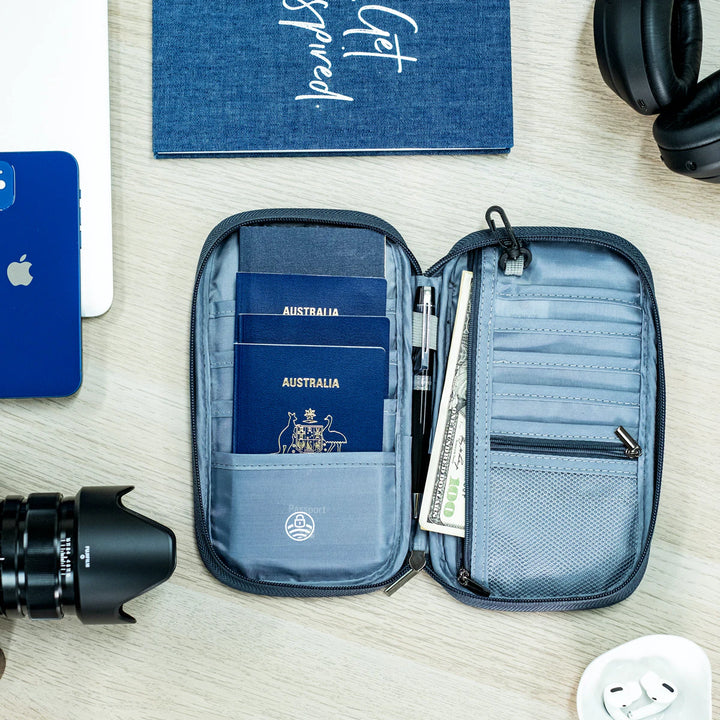
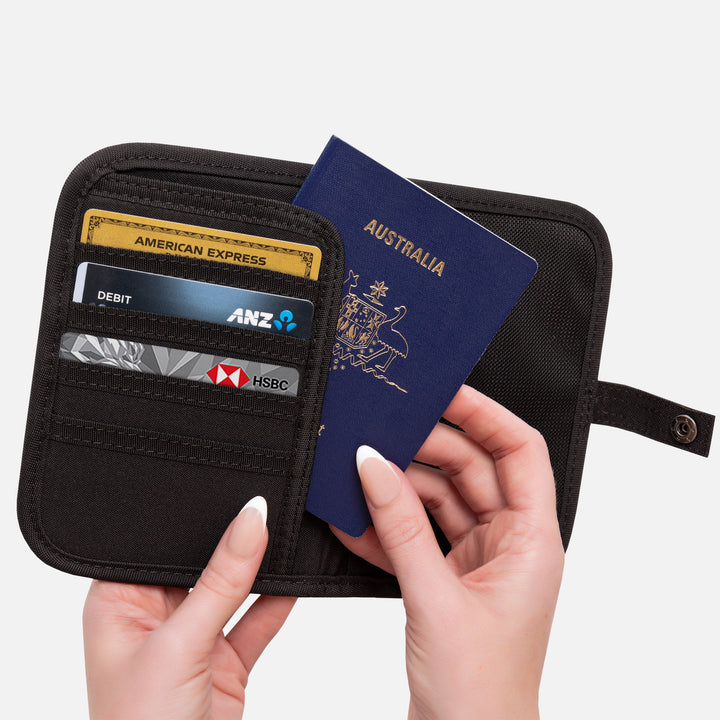
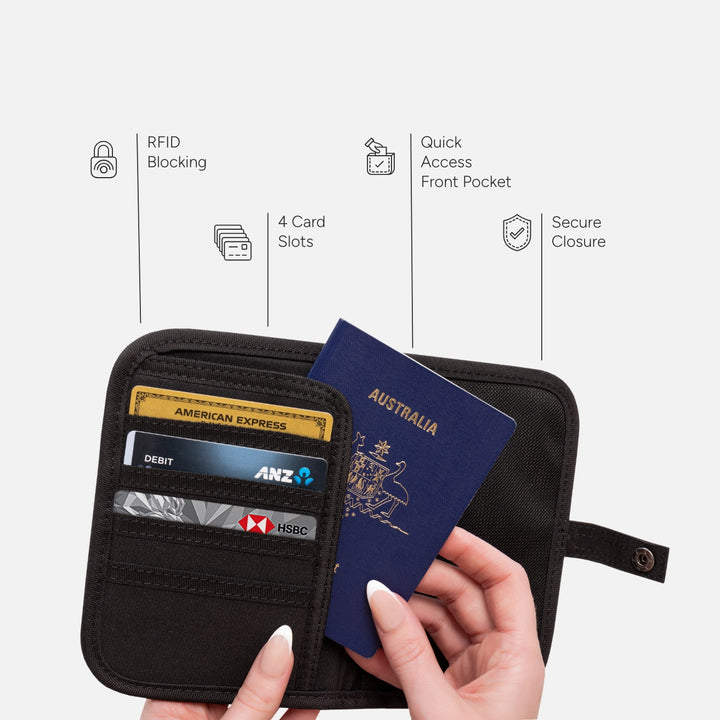
Passport wallets with RFID-blocking material protecting every slot, so your contactless cards and biometric passport are shielded from wireless skimming while you travel. The range includes individual passport holders, family wallets sized for four passports, convertible clutch wallets, and slim neck wallets worn under clothing. All made from tear-resistant materials with dedicated sections for passports, boarding passes, cards, and cash.

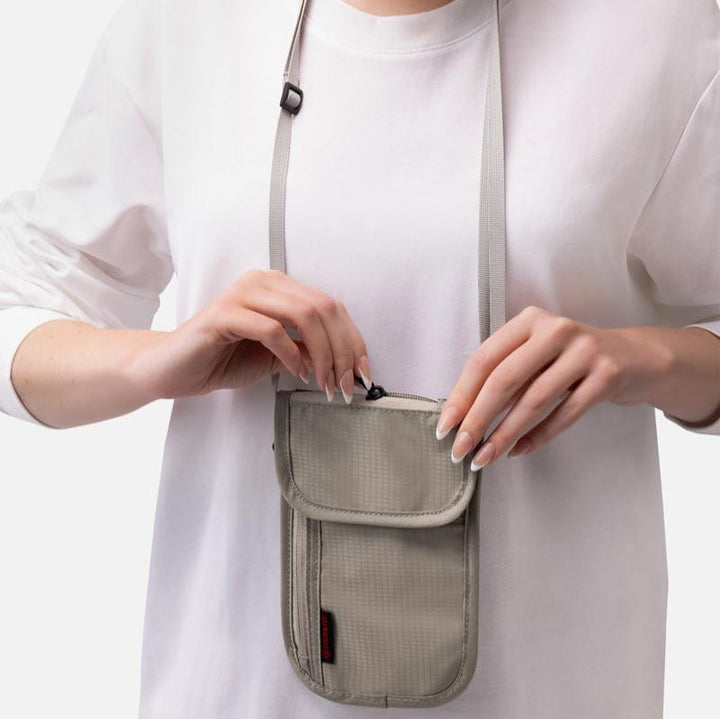
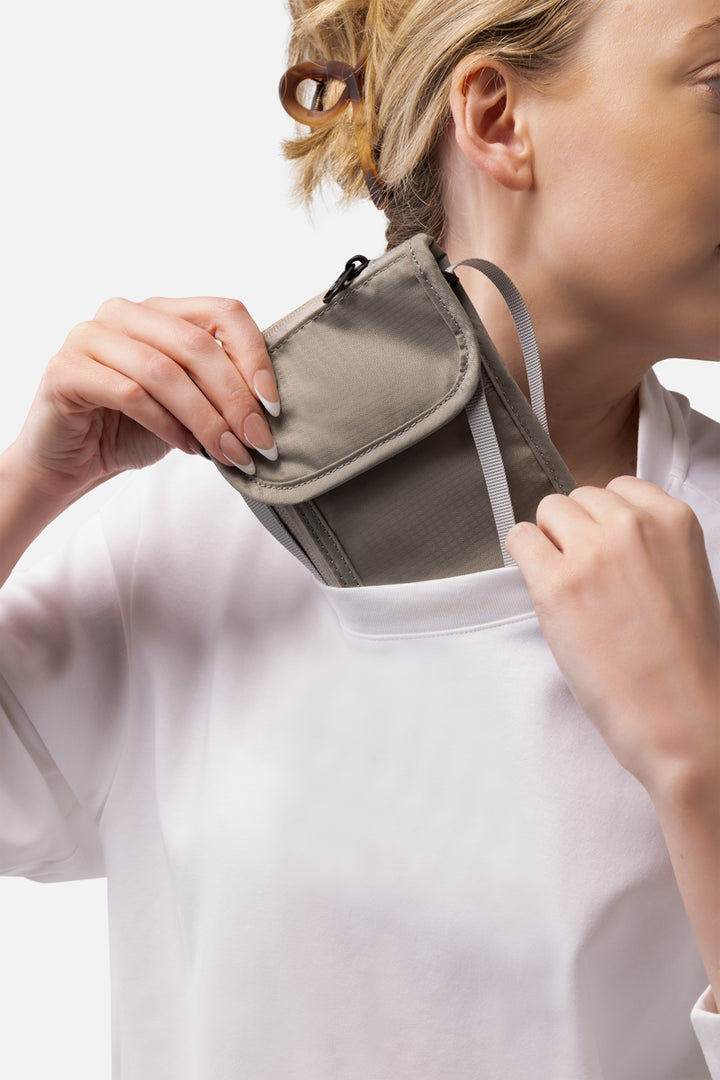
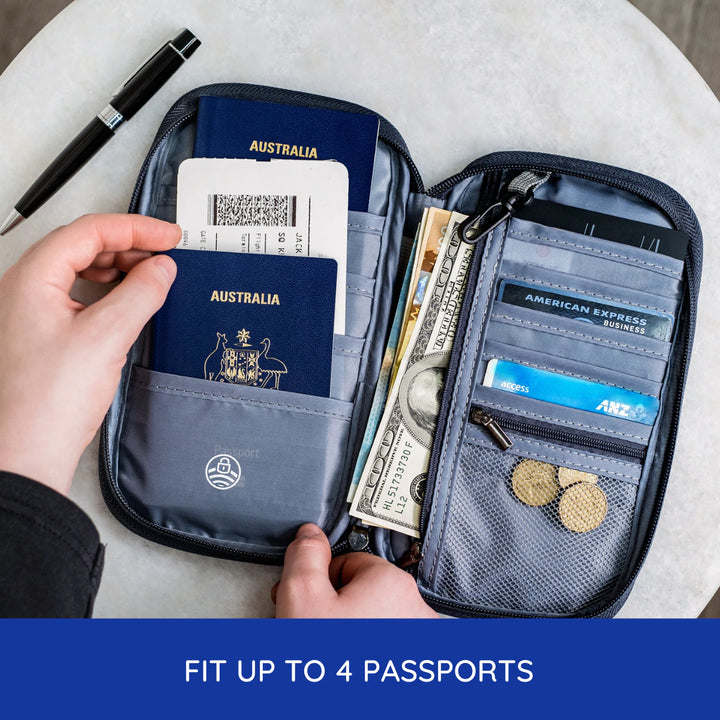
The RFID shielding works passively. Your cards and passport are protected while they're inside the wallet, no switches or settings involved. The family travel wallet keeps up to four passports, boarding passes, and cards together in one place, which speeds up airport check-in and immigration for families and couples travelling together. The neck wallets sit flat against your body under a shirt or jacket for situations where you want documents completely out of sight. Browse all travel accessories for tech organisers, toiletry bags, and more.
How to choose the right travel wallet


Individual, family, or neck wallet

An individual passport wallet holds one passport along with cards, boarding passes, and cash. It's the most common format and works for solo travellers and anyone who prefers to carry their own documents separately. A family travel wallet holds up to four passports in a single organiser with sections for each person's documents. It saves time at immigration because everything is in one place rather than spread across pockets and bags. A neck wallet sits flat under clothing on a cord or strap, keeping documents hidden from view entirely. This format suits situations where security is the top priority and quick access is less important. A convertible clutch doubles as a small evening bag with a detachable chain handle, so it works beyond the airport.

Why RFID blocking matters for travel

Contactless cards and biometric passports contain chips that transmit data wirelessly when a reader gets close enough. RFID skimming uses a handheld reader to pull this data in crowded places without physical contact. The shielding material inside an RFID passport wallet blocks the signal between the chip and any external reader. It's a passive layer of protection that works as long as the card or passport is inside the wallet. For the same RFID protection in an everyday format without the passport section, the [RFID leather wallets] range covers standard card-carrying needs.

Got questions?

Frequently Asked Questions

What is the best passport wallet for a family?
Our Family Travel Wallet is designed specifically for families. It holds four passports in dedicated slots, plus cards, cash, coins, a pen, and travel documents in organised compartments. The detachable wristlet strap lets you carry it hands-free through airports, and RFID-blocking technology protects all four passports simultaneously.
Do I need an RFID-blocking passport wallet?
If your passport has a biometric chip (most modern Australian passports do) or you carry contactless credit and debit cards, RFID blocking adds a layer of protection against wireless skimming. The risk is highest in crowded environments like airports, train stations, and tourist areas. The shielding works passively with no setup required.
Do Australian passports need RFID protection?
Yes. Australian passports issued since 2005 contain an RFID chip with your personal data and biometric photo. While the data is encrypted, RFID-blocking protection adds an extra layer of security against unauthorised scanning, particularly in crowded international airports and tourist areas.
What is the difference between a passport wallet and a regular travel wallet?
A passport wallet has slots specifically sized for passports alongside sections for cards, cash, and boarding passes. A regular travel wallet or RFID leather wallet is built for everyday card and cash carrying without the passport compartment. If you need both, the passport wallet covers travel days and the leather wallet handles daily use at home.